
Hi. I'm Josianne
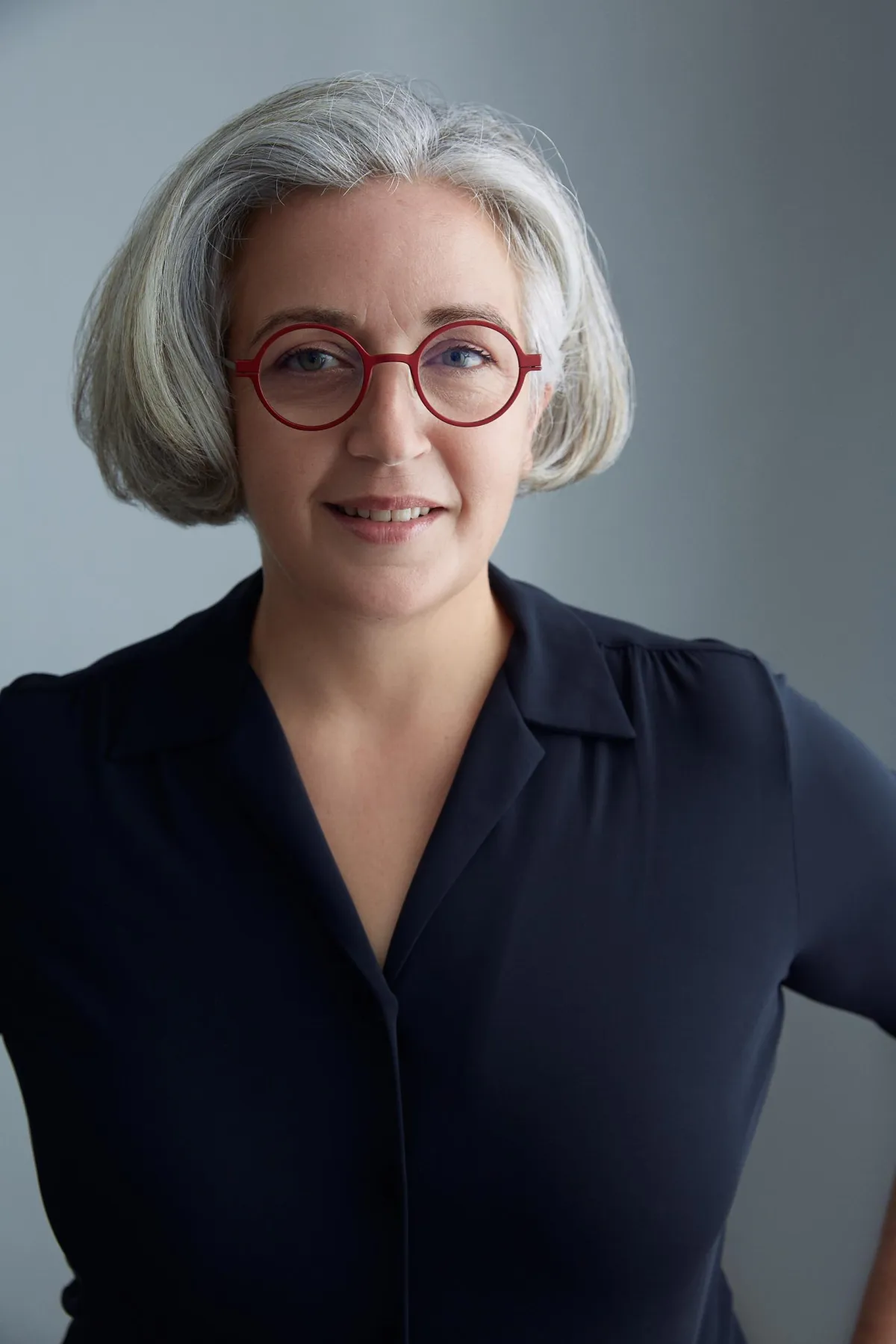
Executive coach, life design guide and leadership development partner.
I help thoughtful, ambitious leaders and professionals find the courage to know who they are, say what they mean and stand for something, especially when the context around them makes that difficult.
Before becoming a coach, I spent 30 years in financial services across Europe and Asia. My career crossed international operations, internal audit, consulting, business transformation, customer experience, business development, technology, digital strategy and marketing, culminating in an Asia Regional Chief Digital Officer role.
It was not a conventional or linear career. I repeatedly moved into unfamiliar disciplines, learned new systems and brought together people, ideas and perspectives that did not naturally sit in the same room. That breadth now shapes how I coach: I can look at a situation through more than one lens and help clients see connections, assumptions and possibilities that may otherwise remain hidden.
I understand the realities of senior leadership from the inside: the competing priorities, complex stakeholders, cultural dynamics and personal compromises that rarely appear in a job description.
Today, my work sits at the intersection of executive coaching, leadership development and life design. I support individuals, groups and organisations through serious leadership work, major life transitions and periods of professional reinvention.
At the heart of my work is a simple shift: helping people see themselves, their work and their place in the world differently, so they can lead and live with more intention, clarity and courage.
I am the founder of Adaptologie and the creator of the Applied Adaptability Method, a developmental approach designed to help people move from self-censorship towards self-authorship, and build a future worth choosing.
1,600+
coaching hours
200+
coaching clients
30 years
in financial services
13 years
APAC experience
5 years
executive coaching
Studied & worked on
4 continents
Experience, qualifications and professional depth
Coaching can involve important decisions about work, identity, leadership and life. Qualifications matter, but so do judgement, professional experience and a real understanding of the environments in which clients operate. I bring all three.
My work is informed by three decades of international business and leadership experience, more than 1,600 hours of professional coaching as at June 2026, and specialist training in coaching, leadership assessment, adaptability, neuroscience and human behaviour.
Professional experience
Former Asia Regional Chief Digital Officer
30 years in financial services across Europe and Asia
Multidisciplinary career spanning international operations, internal audit, consulting, business transformation, customer experience, business development, technology, digital strategy and marketing
Experience leading regional transformation, multidisciplinary teams and culturally diverse organisations
Former member of regional executive leadership teams, with experience of P&L responsibility and complex matrix leadership
Board, advisory and investment committee experience across education, professional coaching, financial inclusion, fintech and health innovation
More than a decade of mentoring founders, students, women professionals and emerging leaders
Executive and leadership coach to senior professionals across industries and geographies
Beyond my executive career
Alongside my corporate and coaching work, I have contributed through board, advisory, investment committee and mentoring roles across education, professional coaching, financial inclusion, fintech, entrepreneurship and health innovation.
Board member, TEDx Hong Kong
Former board member, ICF Hong Kong Chapter
Former board member, Enrich HK
Former investment committee member, AngelHub
Former co-chair, InsurTech Committee, FinTech Association of Hong Kong
Former board adviser, Reformulate Health
Mentor through The Women’s Foundation, the University of Hong Kong, the AIA Accelerator, Global Women and Women in Finance Asia
Former judge, Technovation Challenge
Last but not least, quilter and founder of Indigo Shima, a boutique memory-quilt business, and project lead for two community initiatives that created more than 350 quilts for people in Hong Kong in 2023 and 2026.
These experiences have broadened my perspective across corporate leadership, entrepreneurship, technology, education and social impact. They continue to shape how I see patterns, connect ideas and understand people within the wider systems around them.
Coaching and assessment credentials
Professional Certified Coach, International Coaching Federation (ICF PCC)
EMCC Global Senior Practitioner
EMCC Individual Team Coach Accreditation
Advanced Hogan Assessments Practitioner
Advanced AQai Practitioner
Trained in neuroscience for coaches
Master Practitioner in Neuro-Linguistic Programming
Support, personal development and supervision
I work regularly with Tammy Turner, an ICF Master Certified Coach, for professional coaching supervision.
I also work with coaches of my own, focusing on mindset and business. This supports my continued growth, challenges my remaining blind spots and helps me practice what I ask of my clients.
Member of the ICF Hong Kong Chapter.
Languages
I am fluent in both French and English.
Perspective
Born in Belgium and raised across Belgium, Nigeria and Canada, I have lived, studied and worked on four continents. This third-culture background gives me a particular understanding of identity, belonging, adaptation and the often-unspoken demands of navigating different cultural and professional worlds. I have been based in Hong Kong since 2013.
Professional ecosystem
I am the founder of Adaptologie, an independent Hong Kong-based limited company through which I provide private coaching and life design services to individuals, through both 1:1 coaching and group programmes.
I am also the creator, designer, facilitator and lead coach of The Fourth Side, Adaptologie’s flagship programme for accomplished professionals navigating meaningful life and career transitions.
Separately, I work with Aesara Partners as an independent partner coach on selected corporate engagements, including executive coaching, talent development and leadership development programme design and facilitation.
The longer story
Credentials tell you what I have done. They do not tell you how I came to see people, change and the world the way I do.
As coaching supervisor Edna Murdoch put it, 'who you are is how you coach'.
So here is a small snapshot of my life story, should you wish to know more about me.
A life between worlds
I am Gen X, born in Belgium and raised across Belgium, Nigeria and Canada. We were the first in our family to move abroad, and I experienced life as an immigrant as well as an expatriate. These were very different realities.
French was my only language until I was seven. By sixteen, I was fluent in English and French and had experienced the Belgian, French and Canadian education systems.
Moving countries can uproot you. It can also teach you to be comfortable in your own company and to make connections fast.
I experienced both. This was my first major experience of adaptability.
As the eldest of four siblings, I learned early to be perceptive, read a room and adapt to what the context required.
That skill served me well over decades.
It also has a shadow side.
When you become highly skilled at reading the room, you can become less skilled at hearing yourself.
Thirty years in corporate life
My career in financial services was not the result of a plan.
I entered the industry almost by chance in Belgium, proved capable and kept moving towards greater opportunities, challenges and responsibility. This took me to England and Scotland, eventually becoming an APAC Regional Chief Digital Officer based in Hong Kong.
My APAC roles were the most interesting of my career, both complex and demanding.
It was intense work in complex environments: multiple markets, competing priorities, strong personalities and consequential decisions made without perfect information.
I was accountable for results without direct authority over all the people or resources required to produce them. I sometimes felt I hadn't been set up for success, so changed my perspective: I became highly creative in experimenting. I revisited everything I thought I knew about how to get the job done, and unlearned practices best suited for other geographies. This gave me a renewed interest in engaging and collaborating with others, and resulted in many stories still told today.
I do not coach leaders from a theoretical perspective.
I worked within that reality for thirty years, and I know its cost.
Persistence became overdrive.
Responsibility became over-functioning.
Fierce sense of independence made it harder to ask for help.
It took a toll on both my health and my family life.
When competence is no longer enough
My mother died in hospital in 2008. As the cancer spread to her brain, she lost consciousness and was placed on life support.
As the eldest of the family, I was the person asked to authorise its withdrawal.
I understood the medical reality.
I dutifully made the decision.
The guilt haunted me.
Rather than stopping to grieve, I lost myself in work.
For a few months, that worked.
Until it didn't.
I had what was then referred to as a nervous breakdown, driven largely by unprocessed grief and guilt.
My then husband insisted I went to therapy when it became apparent that I could not deal with this alone.
It was one of the most compassionate gift he gave me.
Therapy helped me become functional again, but I had lost my love for life.
I felt hollow, despite continuing to be perceived as a high achiever.
I tried my best to continue to be a good wife, mother, employee.
But I couldn't get over what felt like a hopeless absurdity of life, ruminating endlessly over one key question: What was the point of it all?
Around that time, someone described therapy and coaching in a way that captured my attention:
Therapy could help me heal by following the tears; coaching could help me begin moving forward by following my dreams.
Dreams felt like a luxury.
I had two young children, a demanding job and a life that required constant attention.
A long commute, a household to tend to.
I did not think I had time to dream, but I could sense that this might matter.
So I hired a coach.
It was one of the most consequential decisions of my life.
Coaching did not erase my grief. It helped me reconnect with the part of myself that could still imagine, choose and create.
I began asking different questions, for which I didn't have answers at the time.
What was the vision for my life?
What did I want to be alive for?
What made me feel alive?
Which parts of my life reflected conscious choice, and which had simply been inherited or endured?
My mother had died at 59.
Both of my grandmothers had died at 55.
For years, I feared that would be my path too. For clarity, this fear was based on zero hard facts, and a whole raft of assumptions.
Coaching helped me face that fear by changing my relationship with uncertainty.
In the process, I changed my relationship with myself.
And accepted that life happens.
I stopped treating life as something fragile that might be taken from me before I had properly lived it, and began participating in it more fully.
That shift eventually contributed to our family moving from Scotland to Hong Kong in 2013, which changed the direction of all our lives.
Today, in my mid-fifties, I am comfortable with both the uncertainty of life and my own mortality, and I can't begin to tell you how much headspace this frees up.
I am aware of the difference between being alive and feeling alive, and I consistently am guided by my vision, which is to live an extraordinary, ordinary life.
When one era ends
The move to Hong Kong opened an extraordinary new chapter.
Then, between 2018 and 2021, several of the structures that had defined my adult life changed in quick succession.
After 20 years, my marriage came to an end. The divorce was amicable and guided by a shared commitment to remain the best parents we could be to our sons.
It was still painful and disruptive.
A respectful ending is still an ending.
Around the same time, both of our sons left home, first for university and then for work.
In 2021, I was made redundant.
Shortly after, the pandemic disrupted the world around us.
None of these events existed in isolation.
With the benefit of hindsight, it is now obvious that they marked the end of an era.
This wasn't obvious at the time.
I felt vulnerable, so I did what I had always done: used grit, determination and persistence to hold on to a sense of control.
I was a strong, independent woman after all.
But the reality was that I could sense I could no longer build the next chapter by simply extending the previous one.
Something had to change.
That period forced the questions that now sit at the heart of my work:
Who am I when the roles that have organised my adult life disappear?
Who am I when nobody needs me?
What remains when competence and usefulness are no longer enough to define me?
What do I want out of life, in my current context and circumstances?
And how do I create a future that is worth choosing, not just merely acceptable?
This was not a pleasant time in my life.
It is called the liminal state, the state in between. Very poetic terms, which lacks the rawness of the experience.
Writing about it now, I notice how easily I still gloss over the confusion, the fear of the unknown and, for the first time in my life, having no idea what to do next, or why.
Becoming a coach
Redundancy created the final rupture.
The decision was not mine, but I am grateful for it because it forced a question I could no longer postpone: did I want another senior corporate role, or did I want a radical change in my career?
I vividly recall making the decision. It was of these key moments in life when you remember exactly where you were, what you were wearing, and what was said and how.
I made myself the promise to start a new era full of adventures I had never been on before, instead of regretting the era that was ending.
I felt euphoric.
That day, I became an era-shifter.
I made that word up and it literally means what it suggests: someone who recognises that one chapter of life has completed and that the next one deserves to be chosen deliberately, not drifted into by default.
I had been training as a coach for some time, initially to deepen my own leadership practice. It quickly became more than that.
Working with clients facing leadership challenges, difficult decisions and major transitions, I began to notice the same pattern beneath very different presenting problems.
A client would arrive asking whether to take a new role, leave a company or begin again.
Some would have challenges in transitioning into a more senior role.
The visible question was rarely the whole question.
Beneath it were assumptions about what they were allowed to want, who they needed to be and what might happen if they stopped complying with the 'script'.
Again and again, I saw capable, accomplished people censoring themselves before they had fully heard themselves.
Many thought there was something wrong with them.
The reality is that they had simply become over-adapted to a life or role that no longer fitted who they were unconsciously becoming.

Why Adaptologie
I called my company Adaptologie, a word I created to mean the pursuit of adaptability.
If you haven't noticed yet, I love creating new words.
Not adaptability as endless accommodation.
Not adaptability as becoming more efficient at tolerating what diminishes you.
Adaptability as a means to thrive and flourish.
The recurring patterns I saw in my clients, and in my own life, became the Applied Adaptability Method: examining the assumptions and roles we inherit, strengthening the relationship with self, and turning insight into decision and action.
The developmental movement is from self-censorship towards self-authorship.
Why this work matters to me
If you have read this far, thank you.
I have shared these parts of my story because who you are shapes how you coach, and I would rather you knew mine.
I no longer fear dying the way I once did, so I can put my energy into feeling alive rather than guarding against loss. I can't overstate how this change of perspective changed how I live on a day to day basis. But no, I don't live every day as if it was my last, in case you wondered.
I love the empowering, magical journey facilitated through the coaching process. I still work with a coach myself, because growth is a journey you don't need to finish. It keeps me honest about my own blind spots and is part of how I try to remain useful to the people I work with.
I know what it is to lose contact with your own life while continuing to function inside it, and to feel hollow while everyone around you sees a high achiever.
I do not feel that way now.
But I remember exactly what it cost, and that memory is part of what I bring into the room with a client.
If you recognise any of that in yourself, that is the conversation I am equipped to have with you: not only through professional training and years of practice, but through having found my own way through it.
What I want for the people I work with is not constant happiness or a life without loss.
It is a life they can recognise as their own, and in which they are willing to participate.
We rarely are asked our permission before major life changes.
We cannot control all of what happens to us.
But we can decide whether the events of our lives become its only authors.
Maya Angelou shared wisdom which seems pertinent here: "You may not control all the events that happen to you, but you can decide not to be reduced by them."
It perfectly captures the balance between accepting the uncontrollable and holding onto your personal power
That is what self-authorship means to me.
Deliberate, willing participation.
If you feel inspired and/or ready, the next step is simple.